
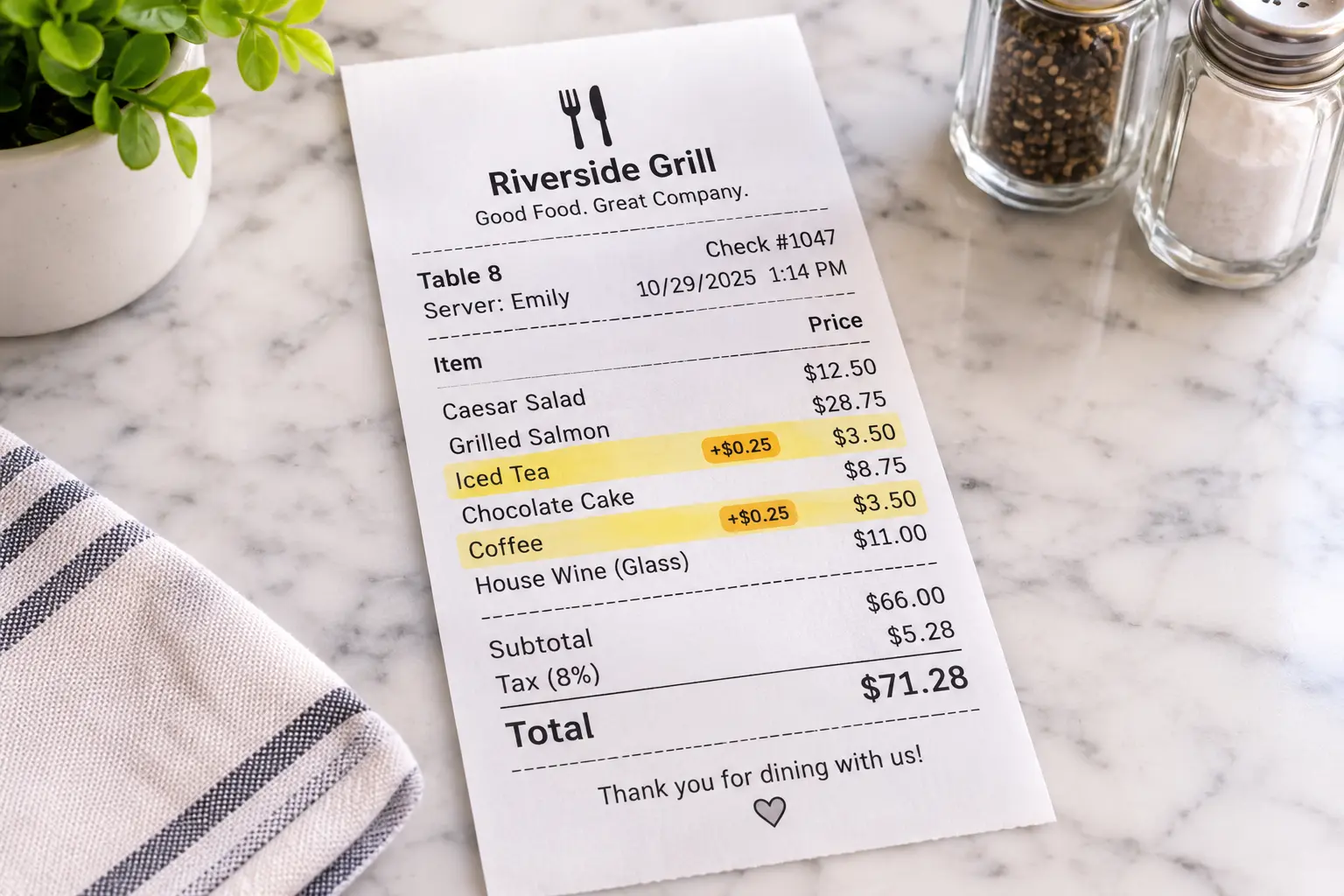
Quick Answer: Distributor price creep is the slow, item-by-item rise in what you pay your food distributor, in small steps that never look like a price hike. Because each change is tiny, it slips past invoice reviews and adds up to real margin loss. The fix is to track the unit price of every item you buy (food, chef supplies, cleaners, and more), compare it against other suppliers before you order, and keep a price history you can bring to your distributor. Doing this by hand is slow, which is why real-time, automatic price comparison is the most reliable way to catch creep early.
Introduction
Here’s a number that stops people cold. Say your restaurant spends $40,000 a month with your distributor. If prices creep up just 3% across the board, that’s $1,200 a month, or $14,400 a year, gone, and no single invoice looked alarming! (That’s an illustration, not a statistic. Your numbers will differ.)
That’s the trouble with distributor price creep. It never kicks the door in. A case of fryer oil goes up 40 cents. Your favorite sanitizer jumps a dollar. Nobody flags it, because every change looks too small to matter. But small changes add up, and they add up on your margin.
In this guide, I’ll show you how distributor price creep works, why it’s so easy to miss, and what you can do about it. Ready to see where your money’s really going?
What Is Distributor Price Creep? (And Why It’s So Easy to Miss)
Distributor price creep is a gradual, item-level increase in the prices you pay, with no announcement and no obvious trigger. It’s different from a headline increase like a fuel surcharge or a published price-list change. Those are loud. Creep is quiet.
Why does it slip by? A few reasons:
- Volume. A busy kitchen can have hundreds of invoice lines every week. Nobody has time to compare each one with last month’s.
- Size. A 25-cent bump on a case feels like rounding error. It isn’t.
- Frequency. Prices that move a little, often, never give you one moment to react.
Picture a single item rising a few cents at a time over six months. No invoice ever looked wrong. Yet at the end, you’re paying noticeably more for the exact same product. Now multiply that across every item on your order guide.
If you’ve ever wondered whether this is happening to you, our guide on whether you’re overpaying your food distributor is a good place to start.
How Distributor Prices Rise Item by Item
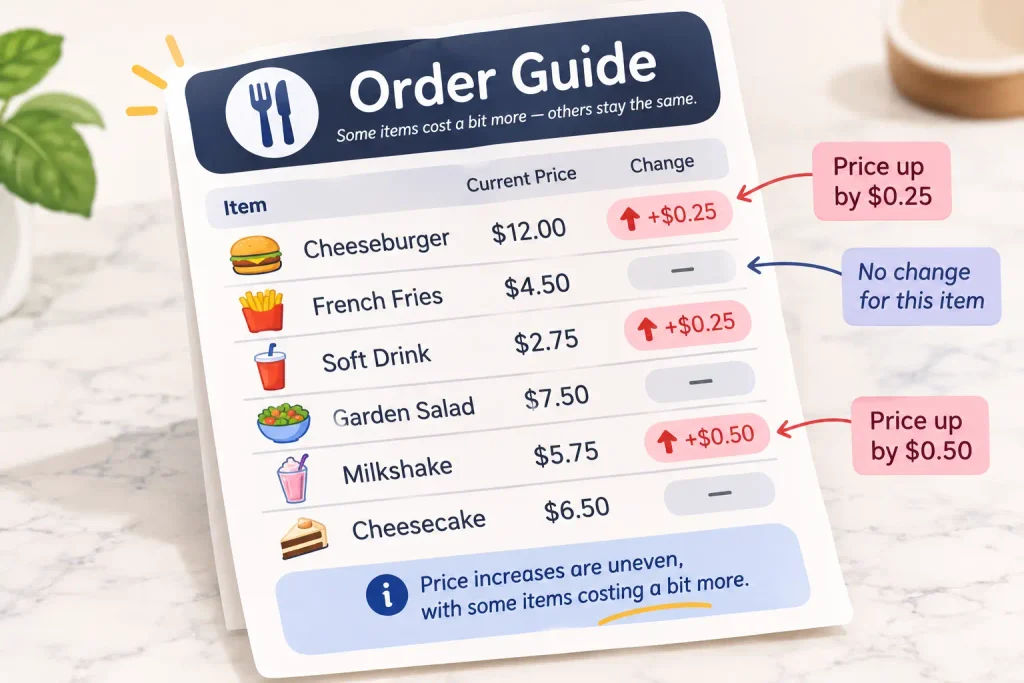
Prices don’t rise evenly. That’s what makes creep so hard to see. Here are the common ways it happens.
- Formula pricing that shifts quietly. Many distributors price on cost-plus formulas, markups, and rebates. When any piece moves, your price moves, and you rarely get a heads-up. For more on the forces behind this, see why food prices change.
- Lines that move without announcement. It isn’t only food. Packaging, disposables, chef supplies, and cleaning products creep too, and these categories get watched the least.
- Substitutions and pack-size changes. A new brand or a slightly smaller case can raise your effective unit price even when the case price looks flat. Always compare cost per unit, not cost per case.
- “Market price” items. Some products float week to week. Without a record of past prices, it’s hard to know whether today’s number is fair.
- Uneven increases. Some items jump while others stay flat. A few unchanged prices can make the whole invoice feel stable while the total drifts upward.
And don’t confuse creep with surcharges. Those are separate line items, and we break them down in our explainer on the distributor fuel surcharge. Creep can be happening underneath and on top of them.
The Real Cost of Price Creep to Your Food Cost Percentage
Let’s do the math slowly, because it’s worth seeing step by step.
- Take one item you order 20 times a month.
- Its price rises just 25 cents each time you buy it.
- That’s $5 a month, or $60 a year, on one item.
- Now suppose 200 items on your order guide behave the same way. That’s $12,000 a year.
(Again, a hypothetical. But it shows why “too small to matter” is a trap!)
Here’s what it does to the rest of your business:
- Food cost percentage and prime cost rise while your menu and portions stay the same.
- Menu price hikes become necessary, and guests notice those far more than you notice a 25-cent change.
- Multi-unit operators feel it twice. If the same item costs different amounts at different locations, creep isn’t just rising; it’s uneven, and that’s harder to catch.
Why Spot-Checking a Handful of Items Isn’t Enough
Many operators check a few items occasionally and call it good. I understand why. It feels manageable. But it leaves a blind spot big enough to drive a delivery truck through.
- Creep hides in the long tail. Cleaners, disposables, smallwares, and specialty items rarely make a “top items” list, yet they’re exactly where nobody’s watching.
- Prices change between checks. A number that was fine last week can be off today.
- Distributors don’t raise prices evenly. If you only look at the items you already watch, the increases land on the ones you don’t.
The better approach is to look at every item, every order, from food to chef supplies to cleaners. That’s the only way to know your pricing is right, not just “probably fine.”
Warning Signs Your Distributor Prices Are Creeping Up
You don’t need a spreadsheet to spot the early signals. Watch for:
- Food cost rising while menu and portions stay the same
- Invoice totals climbing without a matching change in volume
- Unfamiliar brands, pack sizes, or SKUs appearing on deliveries
- Gaps between what you were quoted and what you were billed
- Different prices for the same product across your locations
Seeing two or more of these? It’s time to dig in. Our checklist of the signs you need supplier price comparison walks through each one in more detail.
How to Track and Catch Price Creep Item by Item
Here’s a step-by-step process you can start this week.
- Build a baseline. Record the current unit price for everything you buy, not just the big-ticket items.
- Compare unit price, not case price. Pack sizes and brands change. Cost per unit tells the truth.
- Review every invoice line. The total hides the story. The lines tell it.
- Set alert thresholds. Decide how big a change has to be before someone investigates, and stick to it.
- Compare across suppliers. A price only means something next to another price. Our guide to restaurant supplier comparison shows how to do it fairly.
It works. It’s also a lot of work. Manual tracking breaks down fast with hundreds of items, multiple locations, and a kitchen that needs you right now. Spreadsheets get stale, entries get missed, and the habit fades.
Using Real-Time Price Comparison to Stop Creep Before You Order
This is where the approach changes. Instead of auditing prices after the fact, real-time price comparison checks them before the order goes out.
Here’s what that looks like in practice:
- Automatic. Prices are compared for you, so it doesn’t depend on someone remembering.
- Every item. Food, chef supplies, cleaners, all in one view rather than a short list of favorites.
- Before you buy. You see the better price while you can still act on it, not a month later on an invoice.
- Leverage. A clear record of what you paid, and what you could have paid, makes supplier conversations far easier.
A restaurant vendor price comparison tool takes the manual grind out of this. And if you’re weighing the big names against local options, see how Sysco, US Foods, and regional distributors stack up.
How to Talk to Your Distributor About Price Increases
Once you can see the creep, you can do something about it. A few tips:
- Ask specific questions. “Why did item X go from $41.60 to $42.40?” gets better answers than “why are my prices up?”
- Bring your price history. Dates and numbers turn a complaint into a conversation.
- Know your alternatives. You negotiate best when you know what the same item costs elsewhere.
- Stay professional. The goal is fair pricing and a healthy relationship, not a fight.
Want a deeper playbook? Read our guide on how to negotiate food distributor prices.
Building a Purchasing Process That Resists Price Creep
Catching creep once is good. Making it hard for creep to return is better.
- Assign ownership. Someone should be responsible for purchasing decisions and price review.
- Standardize across locations. Same items, same specs, same price expectations.
- Make price review part of ordering. Not a quarterly project. Part of the routine.
- Track the right numbers. Unit price trends, variance by supplier, and spend by category tell you where to look.
Frequently Asked Questions
What is distributor price creep?
Distributor price creep is the gradual, item-by-item increase in the prices a food distributor charges, usually in small steps that don’t look like a formal price hike. Over time, those small steps add up to a meaningful rise in your food and supply costs.
How do I know if my distributor is raising prices without telling me?
Compare the unit price of each item against what you paid before. Warning signs include rising food cost with no menu change, invoice totals going up without more volume, new brands or pack sizes, and differences between quoted and billed prices.
How much can price creep cost a restaurant?
It depends on your spend. As an illustration, a 3% creep on $40,000 of monthly purchases is $14,400 a year. Your own exposure depends on your volume and how many items are drifting.
Is price creep the same as a fuel surcharge?
No. A fuel surcharge is a separate, visible line on your invoice. Price creep happens inside item prices. You can have both at once. See our explainer on the distributor fuel surcharge.
Why not just check a few key items?
Because creep doesn’t stay on the items you watch. It shows up across the whole order guide, including cleaners, disposables, and chef supplies. Checking every item is the only way to be sure.
What’s the best way to prevent price creep?
Track unit prices for every item, compare suppliers before you order, review invoice lines instead of totals, and keep a price history to use in negotiations. Automatic, real-time price comparison makes this practical at scale.
Can I negotiate with my distributor once I spot creep?
Yes. Specific items, dates, and competing prices give you a strong starting point. Here’s how to negotiate food distributor prices.
Conclusion
Price creep wins when nobody’s looking. It’s patient. It doesn’t need big jumps, just the quiet, steady kind that slip past tired eyes on a busy Tuesday. But once you track prices item by item, the creep has nowhere to hide!
Here’s my advice: start with your baseline, watch every line (not just the headliners), and compare prices before you place the order. Better yet, let automation do the watching so you can get back to running your restaurant.
Ready to see what’s creeping into your own invoices? Pull your last three and start there, or explore how real-time price comparison can do the checking for you.