
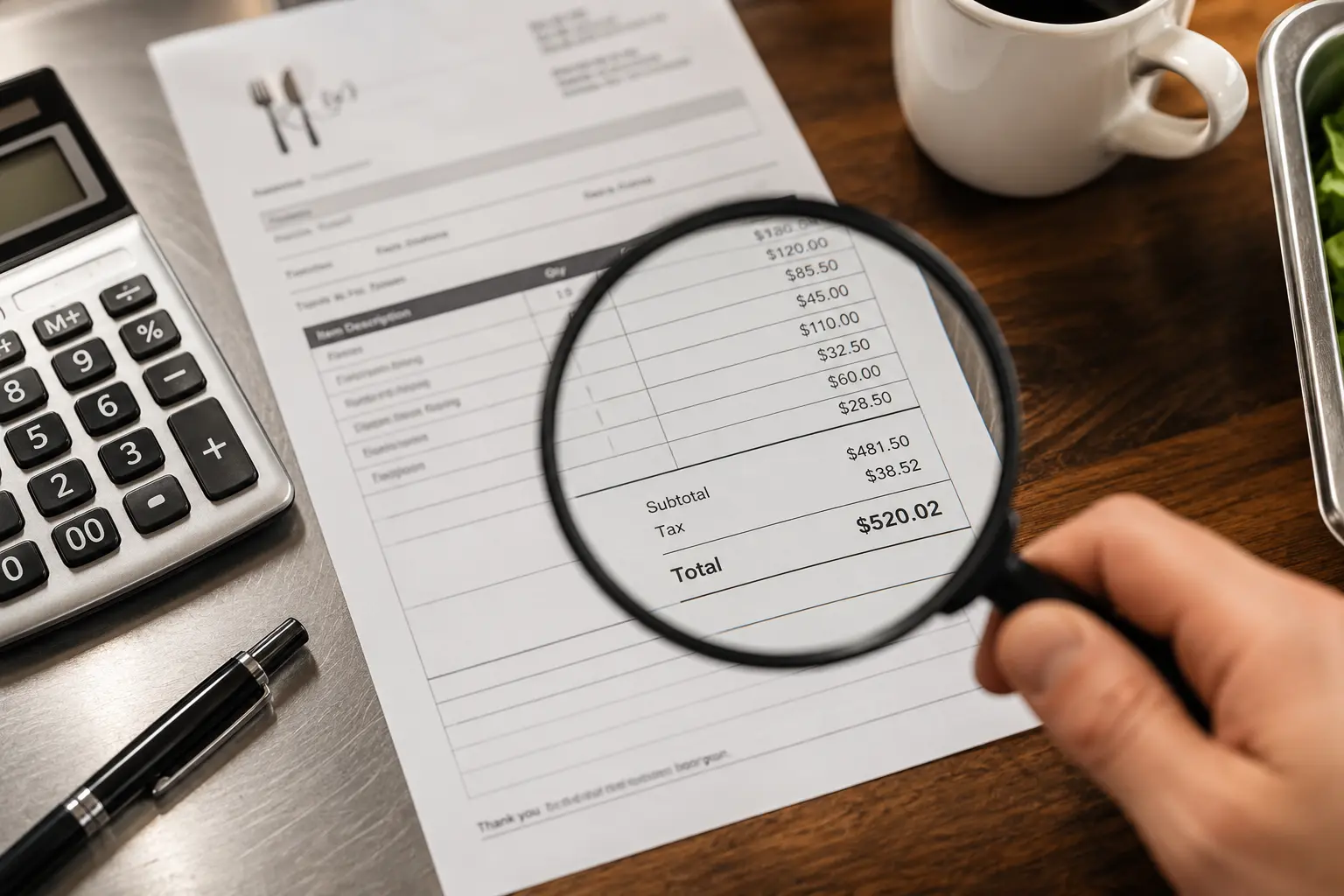
Quick Answer: You’re likely overpaying your food distributor if:
- You haven’t compared prices with another vendor in 6-12 months
- Your food cost percentage keeps rising with no clear menu-related cause
- You’ve never matched invoices against actual deliveries
- You don’t have a written, locked-in pricing agreement
- You haven’t run a formal restaurant food cost audit in over a year
Introduction
If you’ve ever stared at an invoice and thought “that seems like a lot,” you’re not imagining things. Many restaurant owners are overpaying their food distributor without realizing it — often by 5% to 15% on their total food costs. The good news: a quick restaurant food cost audit can tell you exactly where you stand, and most owners can spot the warning signs themselves before calling in help.
Here’s how to know if it’s time to check. Below are the five clearest signs it’s time to dig into your numbers, followed by a simple process for doing it yourself.
Sign #1: Your Food Cost Percentage Keeps Creeping Up
Your food cost percentage should stay relatively stable if your menu and sales volume haven’t changed much. If it’s climbing month over month without a clear reason, your distributor pricing is a likely culprit.
What to check:
- Compare your current food cost percentage to the same period last year
- Look for gradual increases rather than one-time spikes
- Flag categories (proteins, dairy, produce) where costs have risen fastest
Most full-service restaurants target a food cost percentage between 28% and 35%. If you’re consistently above that range without a menu-price explanation, it’s worth a closer look.
Sign #2: You’ve Never Compared Prices Across Multiple Vendors
Loyalty to one distributor is common, but it can be expensive. Distributors count on the fact that most restaurant owners are too busy to shop around.
Why this matters:
- Prices for the same product can vary 10-20% between distributors
- Distributors often quietly raise prices on customers who never push back
- A second quote — even if you don’t switch — gives you real leverage
Getting a comparison quote from a second supplier once or twice a year is one of the simplest ways to keep your primary distributor honest.
For a step-by-step breakdown of how to do this properly, see our guide to comparing restaurant suppliers and vendor prices.
Sign #3: Your Invoices Don’t Match What You Ordered
This is the most direct sign of overpaying, and it’s more common than most owners assume. Pricing errors, substitutions, and quantity discrepancies happen — sometimes by accident, sometimes not.
Common invoice discrepancies to watch for:
- Prices that don’t match your agreed contract rate
- “Substituted” items billed at a higher price than what was requested
- Case sizes or unit counts that don’t match delivery
- Fuel surcharges or fees that appear without explanation
Spot-checking invoices against delivery slips for even one month can reveal patterns you’d otherwise miss. Confirmed you’re overpaying? Here’s exactly how to negotiate food distributor prices once you have the data to back it up.
Sign #4: You Don’t Have a Written Pricing Agreement
If your pricing is based on a verbal understanding or a handshake deal from years ago, you have little protection against gradual price creep.
A solid distributor agreement should include:
- Locked-in pricing for your top 15-20 highest-volume items
- Clear terms for how often prices can change
- Advance notice requirements before any price increase
- Defined substitution and out-of-stock policies
Without this in writing, distributors have far more flexibility to adjust pricing in their favor.
Sign #5: You Haven’t Done a Formal Audit in Over a Year
Even well-run restaurants tend to “set and forget” their distributor relationship. But supplier costs, market conditions, and your own purchasing volume all change — which means your pricing should be reviewed on a regular schedule.
A basic restaurant food cost audit involves:
- Pulling 2-3 months of recent invoices
- Identifying your top 20 most-ordered items by spend
- Comparing unit prices against current market rates or a second distributor quote
- Checking for consistent overcharges, fees, or substitution patterns
- Bringing findings to your distributor to renegotiate
Restaurants that audit annually typically catch issues before they become expensive habits. Restaurants that never audit rarely find out until profit margins are already suffering.
How to Run a Simple Distributor Price Check This Week
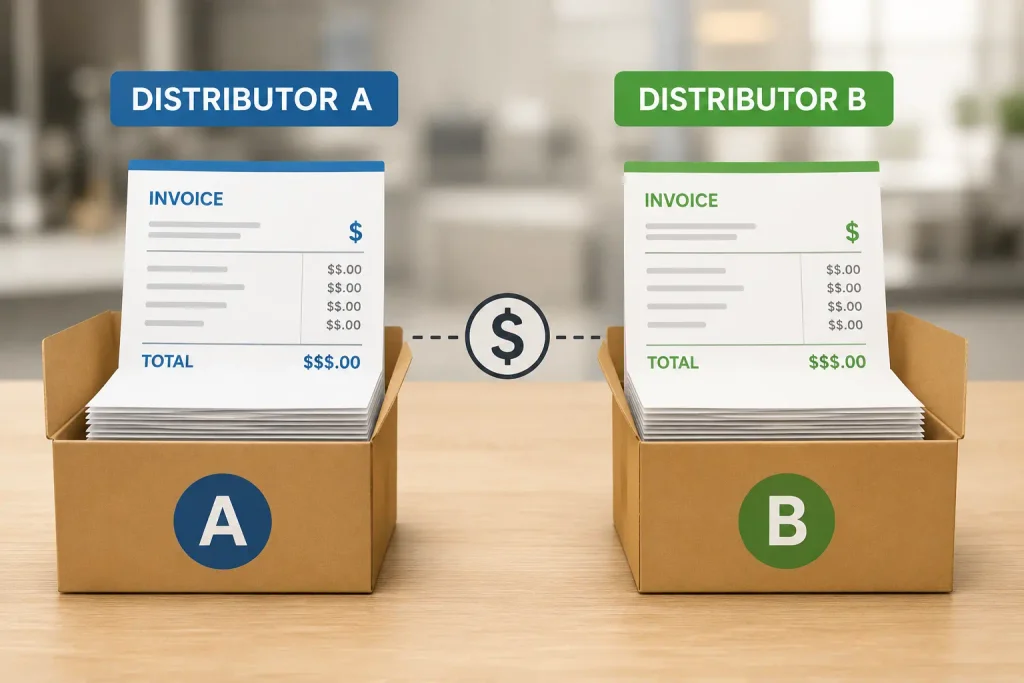
You don’t need special software to get started. Here’s a straightforward approach:
- Pull your last 3 months of invoices from your primary distributor.
- Rank your top 20 items by total spend — these drive most of your food cost.
- Get a comparison quote from at least one other distributor for those same items.
- Calculate the price gap, both per-item and as a percentage of total spend.
- Bring the numbers to your rep and ask directly about the discrepancy.
Most distributors will renegotiate rather than lose a customer once they know you’re comparing prices.
If running this check manually every few months sounds like a hassle, a restaurant vendor price comparison tool can automate the process, flagging pricing gaps on every order instead of just when you remember to look.
Frequently Asked Questions
How often should I audit my food distributor pricing?
At minimum, once a year. High-volume restaurants or those with tight margins benefit from checking every six months, especially during periods of high inflation or supply chain volatility.
What’s a normal food cost percentage for a restaurant?
Most full-service restaurants aim for 28-35%, while quick-service restaurants often target 25-30%. Your ideal number depends on your menu, concept, and pricing strategy.
Do I need special software to audit my invoices?
No. A spreadsheet comparing your top-spend items across invoices and time periods is enough to spot most pricing issues. Dedicated food cost software helps at scale, but you don’t need it to get started.
Will switching distributors hurt my relationship or service quality?
Not necessarily. Many owners use a comparison quote purely as leverage to renegotiate with their current distributor, rather than switching. Distributors are generally motivated to keep a customer once you raise pricing concerns directly.
The Bottom Line
Overpaying your food distributor rarely happens all at once, it happens gradually, through price creep, invoice errors, and a lack of regular review. The five signs above are your early warning system, and a basic audit is the fastest way to confirm whether your suspicions are justified.
If even one of these signs sounds familiar, it’s worth spending an afternoon reviewing your invoices. The cost of checking is a few hours. The cost of not checking could be thousands of dollars a year.
Ready to see how your current distributor stacks up against the competition? Check out our breakdown of Sysco vs. US Foods vs. regional distributors to see how pricing, service, and product range compare before you make your next move.