
Quick Answer
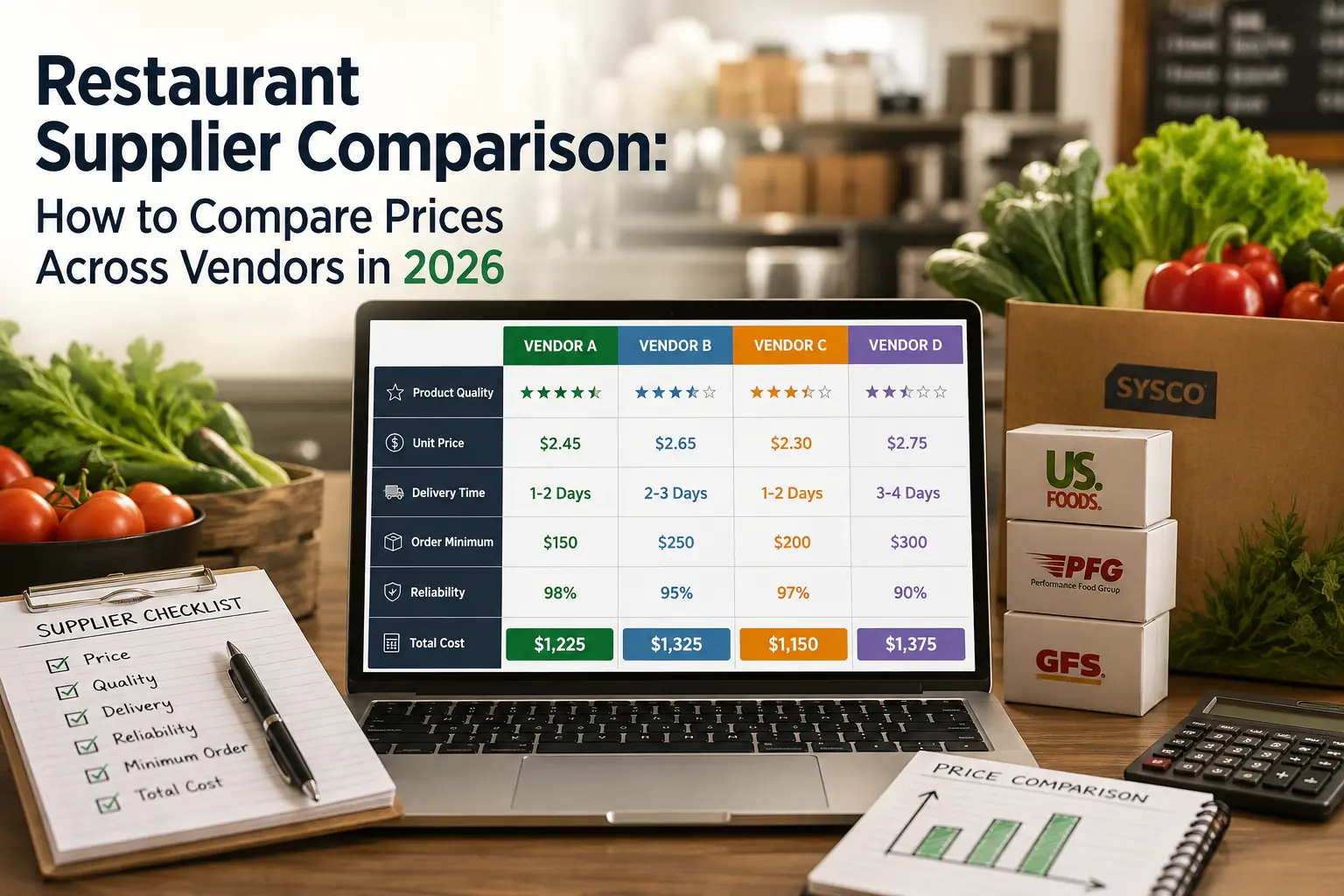
- Request itemized quotes from at least 3 vendors, using the same units of measure, so you’re comparing apples to apples.
- Look beyond unit price: factor in delivery minimums, payment terms, product consistency, and hidden fees like fuel surcharges.
- Most restaurants spend 28-35% of revenue on food costs. A disciplined comparison typically uncovers 5-15% in savings, even on categories thought to be already optimized.
- Tools like Genius Food Purchasing automate this — pulling live vendor pricing into one dashboard instead of manual spreadsheets.
Introduction
The average restaurant spends somewhere between 28% and 35% of its revenue on food costs. Let that sink in for a second — nearly a third of everything that comes through the door goes right back out to pay for the food itself. And here’s the kicker: a huge chunk of that number isn’t decided by your menu. It’s decided by who you buy from — which is exactly why a proper restaurant supplier comparison is one of the highest-leverage things an operator can do.
I’ve watched kitchens overpay for years simply because nobody ever sat down and ran a real comparison. Prices crept up quietly, invoices got rubber-stamped, and nobody asked the obvious question: is this actually the best deal we can get? It happens to nearly every operator at some point, and it’s completely avoidable.
Switching or renegotiating with suppliers can save a restaurant thousands of dollars a year — sometimes tens of thousands, depending on volume. But doing it right takes more than eyeballing a few price sheets. It means understanding pricing structures, spotting hidden fees, weighing quality tradeoffs, and actually running a disciplined, side-by-side comparison across vendors.
This guide walks you through exactly that. Whether you’re managing food cost for a single location or juggling procurement across a growing group, here’s how to compare food suppliers the right way.
Restaurant Supplier Comparison: Why It Matters
Food costs eat directly into your margins, and margins in this industry are already razor-thin. A 2-3% swing in your cost of goods sold can be the difference between a profitable quarter and a stressful one.
- Profit margins live and die by food cost. Even small price discrepancies compound fast across a full year of ordering.
- Overpaying is easy to miss. Price creep, inconsistent invoicing, and a lack of vendor transparency can quietly drain your bottom line without setting off any alarms.
- Supplier choice shapes more than cost. It affects consistency, quality, and ultimately what you’re able to charge on the menu.
- The upside is real. Restaurants that build a habit of comparison shopping — rather than sticking with “the supplier we’ve always used” — routinely find 5-15% in savings on categories they thought were already optimized.
If you’ve never run a formal restaurant supplier comparison, you’re probably leaving money on the table. Tools like Genius Food Purchasing’s price comparison platform exist specifically to surface these gaps automatically, but even a manual review is better than none.
Key Factors to Compare Beyond Just Price
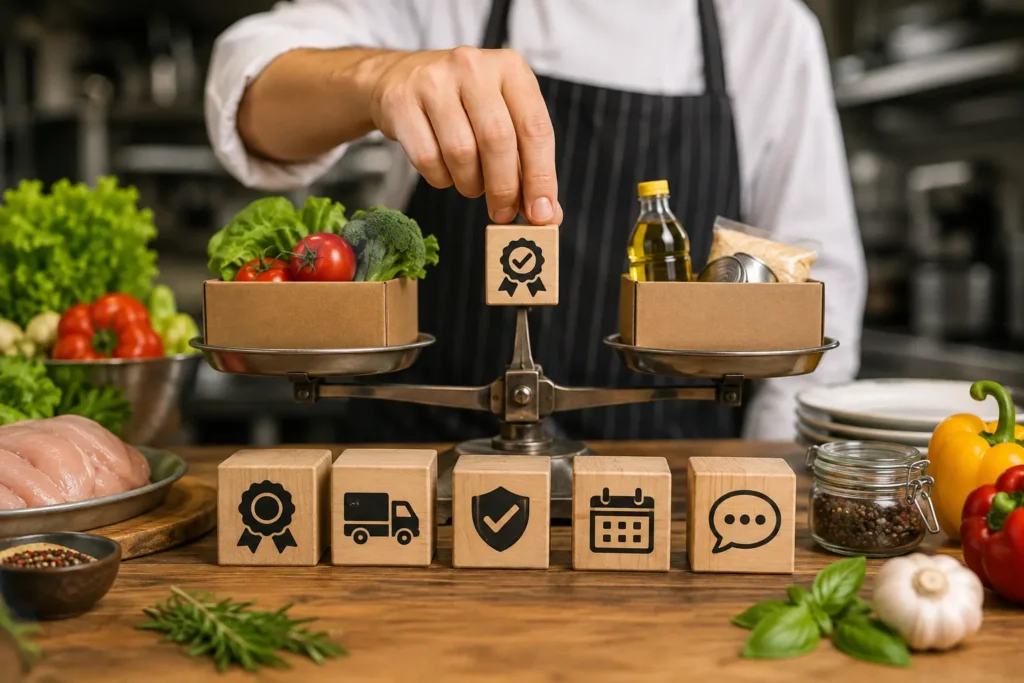
Here’s a mistake a lot of operators make when comparing food distributor prices: they compare unit prices and call it a day. But the sticker price on a case of chicken thighs is only part of the story.
- Delivery minimums and frequency. A lower price is worthless if it forces you into larger orders than you need, leading to spoilage.
- Payment terms. Net 30 versus cash-on-delivery can meaningfully affect your cash flow, and early payment discounts can quietly add up.
- Product quality and consistency. The cheapest case isn’t cheap if half of it gets sent back or ruins a dish.
- Customer service and account management. A responsive rep who fixes problems fast is worth real money, even if it’s hard to put a number on it.
- Return and credit policies. How easy — or painful — is it to get credit for damaged or incorrect items?
- Sourcing and sustainability practices. If your brand markets itself around local or sustainable sourcing, this becomes a pricing factor too, not just a marketing one.
Note: Not sure if a comparison is even necessary yet? Start by checking these 5 signs you may be overpaying your food distributor — if any apply to you, a full supplier comparison is the logical next step.”
How to Request and Read Vendor Quotes
Getting an apples-to-apples comparison starts with how you ask for pricing in the first place.
- Send a proper RFP (request for proposal). Spell out exact products, quantities, delivery frequency, and quality specs so every vendor is quoting the same thing.
- Standardize your units of measure. One supplier quoting by the case and another by the pound will make comparison nearly impossible unless you convert everything first.
- Watch for hidden fees. Fuel surcharges, minimum order fees, and restocking fees can turn a “great deal” into an average one once the invoice actually arrives.
- Learn to spot red flags. Vague pricing sheets, reluctance to itemize costs, or pressure to sign quickly are all signs a vendor doesn’t want you comparing too closely.
Tools and Methods for Comparing Prices Across Vendors
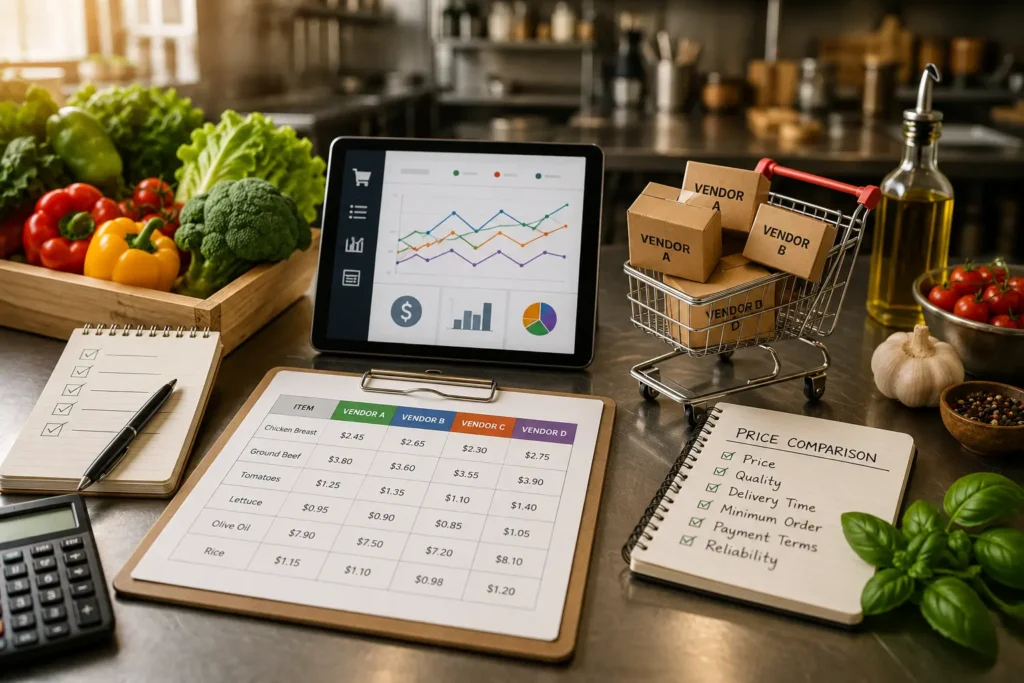
You don’t need to run your restaurant supplier comparison by memory or gut feel — there are real systems built for it.
- Manual spreadsheet templates. A simple but effective starting point: list every SKU, then track pricing from each vendor side by side.
- Procurement and inventory software. Platforms built specifically for restaurant purchasing can automate what would otherwise be hours of manual cross-referencing.
- Group purchasing organizations (GPOs) and buying co-ops. Pooling volume with other operators can unlock pricing tiers a single location could never reach alone.
- Bid sheets. Send the same bid sheet to multiple suppliers at once so you’re negotiating from a position of leverage, not guesswork.
This is exactly the kind of work that Genius Food Purchasing’s price comparison tool was built to simplify — pulling live vendor pricing into one view so you’re not stitching together spreadsheets by hand every week. If you want to see what that actually looks like for your own purchasing, you can check our pricing or book a demo to walk through it.
Common Mistakes Restaurants Make When Comparing Suppliers
Even operators who try to compare vendors often fall into a few predictable traps.
- Focusing only on unit price. Total cost of ownership — waste, delivery reliability, credit turnaround — matters just as much.
- Ignoring waste and spoilage differences. A supplier with inconsistent quality can quietly cost you more in trim loss and 86’d items than their invoice suggests.
- Failing to renegotiate annually. Market prices shift, and a rate that was competitive two years ago may be well above market today.
- Overlooking contract terms. Lock-in periods and cancellation penalties can trap you with an underperforming vendor long after you’ve found a better option.
Once you’ve got the numbers, the next step is putting them to use — see our guide on how to negotiate food distributor prices without jeopardizing the relationship.
How to Switch Suppliers Without Disrupting Operations
Finding a better vendor is only half the job — switching without chaos in the kitchen is the other half.
- Phase in one category at a time. Don’t overhaul produce, proteins, and dry goods all in the same week.
- Keep a backup supplier for key ingredients. Redundancy protects you if a new vendor has early hiccups.
- Communicate the change to kitchen staff. Update recipe costs and prep notes so nobody’s caught off guard by a different product spec.
- Time it around slow seasons or menu changes. A supplier switch is far less risky when it isn’t colliding with your busiest week of the year.
If you’re not sure where to start, it’s worth talking it through with someone who’s done this before — you can always contact us and we’ll help you map out the transition.
Questions
FAQs
How much do restaurants typically spend on food costs?
Most restaurants spend between 28% and 35% of revenue on food costs, making supplier pricing one of the biggest levers for improving margins.
How much can restaurants save by comparing suppliers?
Restaurants that regularly compare vendors, rather than sticking with their current supplier by default, typically find 5-15% in savings, even in categories they assumed were already optimized.
What should I compare besides price when choosing a food supplier?
Beyond unit price, compare delivery minimums and frequency, payment terms, product consistency, customer service, return/credit policies, and sourcing practices — total cost of ownership matters more than the sticker price alone.
How do I get an accurate price comparison across vendors?
Send a formal RFP specifying exact products, quantities, and quality specs, standardize units of measure across all quotes, and request itemized pricing to catch hidden fees like fuel or restocking surcharges.
How often should restaurants renegotiate with suppliers?
Annually, at minimum. Market prices shift over time, and a rate that was competitive a year or two ago may no longer reflect current market pricing.
Final Thoughts
A restaurant supplier comparison isn’t a once-a-year chore you check off and forget. It’s an ongoing discipline — one that protects your margins, keeps quality consistent, and gives you real leverage at the negotiating table. The restaurants that treat vendor comparison as routine, not reactive, are the ones that stay profitable even when food costs across the industry keep climbing.
So don’t wait for a bad invoice to prompt action. Build your comparison spreadsheet this week, request quotes from at least three vendors, and start tracking the numbers that actually matter. Or, if you’d rather skip the spreadsheets entirely, see how Genius Food Purchasing’s price comparison platform can do the heavy lifting for you — check our pricing or book a demo today.