
The Short Answer
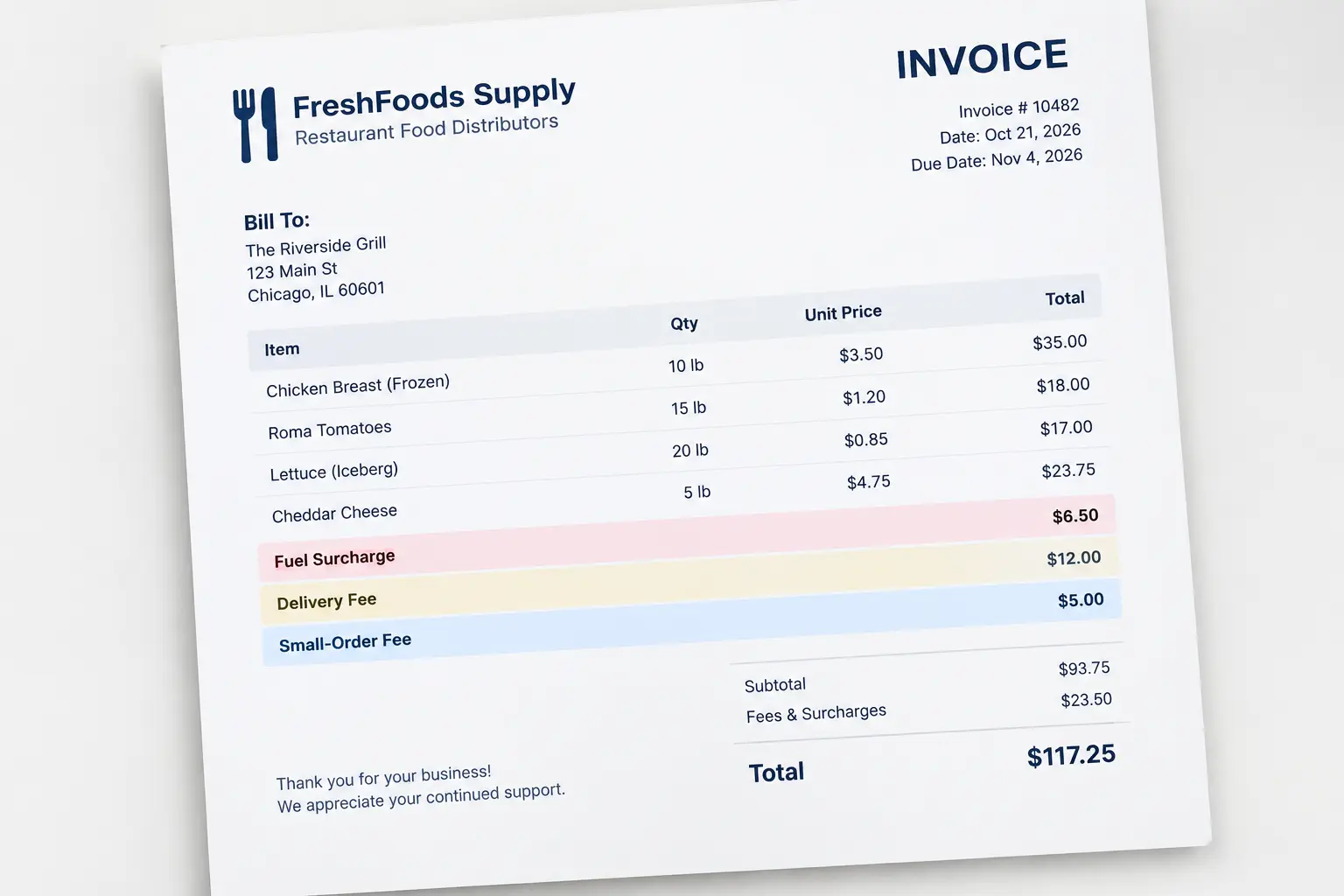
A distributor fuel surcharge, along with delivery fees and drop minimums, is a charge added on top of the item prices on your distributor’s price sheet. These charges can make a supplier that looks cheaper per case cost more per order. To compare distributors fairly, compare the total you pay for the same order, not just the price of each item.
If you only have a minute, here is the summary:
- Fuel surcharge: a percentage or flat fee added to cover transportation costs, often listed separately on the invoice.
- Delivery fee: a charge for bringing the order to your door, sometimes waived above a certain order size.
- Drop minimum: the smallest order a distributor will deliver. Order less, and you may pay a small-order fee or be asked to add items.
- The fix: compare item prices and these extra charges together, on every order.
Why Price Sheets Don’t Tell the Whole Story
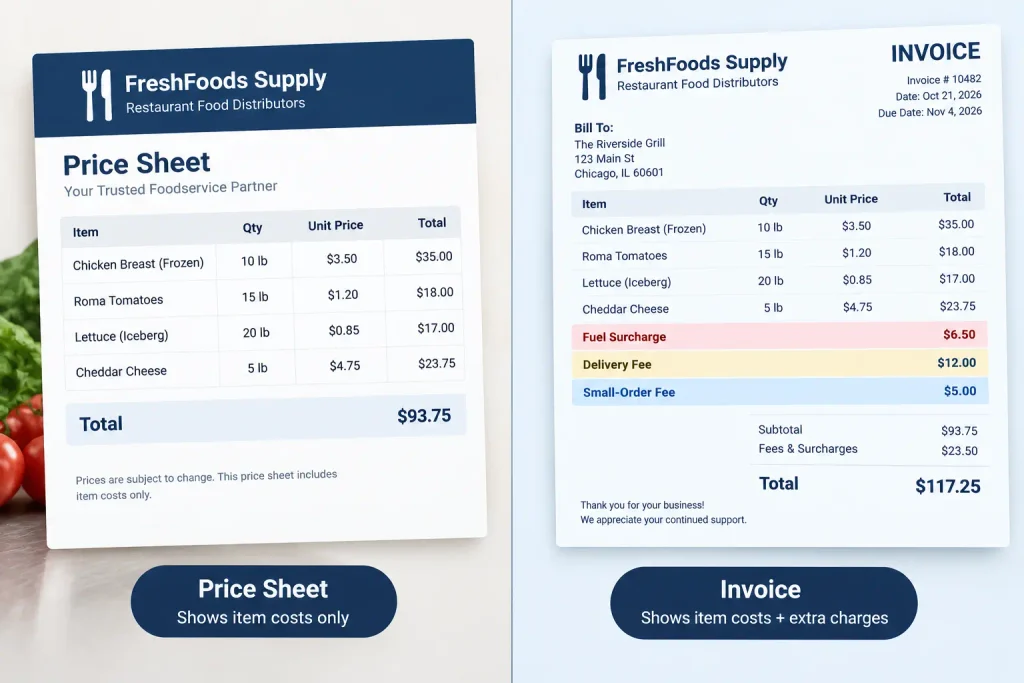
A price sheet shows what each item costs. It usually doesn’t show what it costs to get those items to your kitchen. Those costs show up later, as extra lines on the invoice, and they are easy to overlook when you are focused on the cost of chicken, produce, or dry goods.
That is how a distributor can win a price comparison and still lose on your invoice. If you have ever wondered whether you are paying too much, it is worth reading 5 signs you’re overpaying your food distributor alongside this guide.
What is a Distributor Fuel Surcharge?
A distributor fuel surcharge is an extra charge added to your invoice to cover rising transportation and fuel costs. It may be a percentage of your order, a flat amount per delivery, or a tiered fee that changes with fuel prices.
Why it matters: because it is often a percentage, a distributor fuel surcharge grows as your order grows. It can also change over time without any change to the item prices you see, which makes it easy to miss.
What to Ask Your Distributor:
- Is the surcharge a percentage or a flat amount?
- What triggers a change in the surcharge?
- Does it apply to the whole order or only certain items?
- Is it shown on the price sheet, or only on the invoice?
What are Delivery Fees?
A delivery fee is a charge for transporting your order to your location. Some distributors build delivery into their item prices. Others charge a separate fee per drop, per order, or per delivery day.
Why it matters: a flat delivery fee hurts most on small orders. If you split purchases across several delivery days to keep inventory fresh, you may pay the fee more often than you realize.
What to ask your distributor:
- Is there a delivery fee, and is it per order or per stop?
- Is it waived above a certain order value?
- Are there extra fees for off-schedule, rush, or weekend deliveries?
What is a Drop Minimum?
A drop minimum, also called an order minimum or delivery minimum, is the smallest order value a distributor will deliver without extra charges. If your order falls below it, you might pay a small-order fee, or you might feel pressure to add items you don’t need just to reach the threshold.
Why it matters: padding an order to hit a minimum means buying more than you planned. That can increase waste, tie up cash, and push you into stocking items before you need them. Your food cost percentage, which you can benchmark with what food cost should be in a restaurant, suffers quietly.
What to ask your distributor:
- What is the minimum, and does it vary by delivery day or location?
- What is the fee if I order below it?
- Does the minimum count the whole order, or only certain categories?
A Simple Example: The Cheaper Supplier That Isn’t
Here is an illustrative example. The numbers are made up to show the math, not to represent any particular distributor.
| Distributor A | Distributor B | |
|---|---|---|
| Item total for the same order | $900 | $925 |
| Fuel surcharge | 3% ($27) | None |
| Delivery fee | $35 | $0 (waived above $750) |
| Total cost | $962 | $925 |
On the price sheet, Distributor A looks $25 cheaper. On the invoice, it costs $37 more. Multiply that difference across every order in a month, and the gap becomes real money.
The lesson is not that one type of distributor is better. It is that the answer depends on the order, and it changes as prices and charges change.
Why This is Easy to Miss
There are three reasons these costs slip through:
- They aren’t on the price sheet. You see them only after the order is placed.
- They change. A distributor fuel surcharge can move even when item prices stay put. Food prices themselves change constantly, and the invoice is usually the last place you find out.
- They are spread across many items. When a charge is a percentage of the whole order, no single line looks alarming.
How to Compare Distributors on Total Cost
Use this checklist the next time you compare suppliers.
- Start with the same order. Compare identical items and quantities from each distributor.
- Compare every item, not a sample. A few items can mislead you. The fuller the comparison, the more accurate the total.
- Add the extra charges. Include fuel surcharges, delivery fees, and small-order fees for each supplier.
- Check the minimum. Ask whether your normal order size clears each distributor’s drop minimum.
- Repeat regularly. Prices and surcharges move, so a comparison that was right last quarter may be wrong today.
For a deeper walkthrough, see our guide to how to compare prices across restaurant suppliers.
Can You Negotiate These Charges?
Often, yes. Fuel surcharges, delivery fees, and minimums are often more flexible than item prices, especially if you know what competing suppliers charge. Having current numbers in hand makes the conversation much easier. Our guide on negotiating better prices with food distributors shows how to do it without damaging the relationship.
Doing this By Hand is Hard to Keep Up
Pulling price sheets, adding up surcharges and recalculating totals for every item and every supplier takes time, and the numbers are out of date the moment a price changes. That is why more operators are moving to automatic, real-time price comparison that checks every item they buy, not just a handful. If you are weighing your options, here is what to look for in a restaurant vendor price comparison tool.
Frequently Asked Questions
What is a distributor fuel surcharge on an invoice?
A distributor fuel surcharge is an additional fee added to your invoice to cover transportation and fuel costs. It may be a percentage of the order or a flat fee, and it can change over time.
Are delivery fees normal for restaurant food distributors?
Yes, many distributors charge delivery fees, though some include delivery in their item prices or waive the fee above a certain order size. Policies vary by distributor, so always ask.
What is a drop minimum?
A drop minimum is the smallest order a distributor will deliver without extra charges. Orders below the minimum may trigger a small-order fee or require you to add items.
How can I lower the delivery costs my restaurant pays?
Consolidate orders where it makes sense, ask whether fees can be waived above a certain order value, compare total cost across suppliers, and negotiate surcharges and minimums using current competitor quotes.
How do I compare food distributors fairly?
Compare the same order across suppliers and include fuel surcharges, delivery fees, and minimums in the total, not just the per-item price. Repeat the comparison regularly because prices and fees change.
The Bottom Lline
The price on the price sheet is only part of what you pay. A distributor fuel surcharge, delivery fees, and drop minimums can turn a low-priced supplier into a high-cost one, and they are easy to miss because they appear late and change often. Compare total cost on every item and every order, and you will see what your distributor is really charging you.